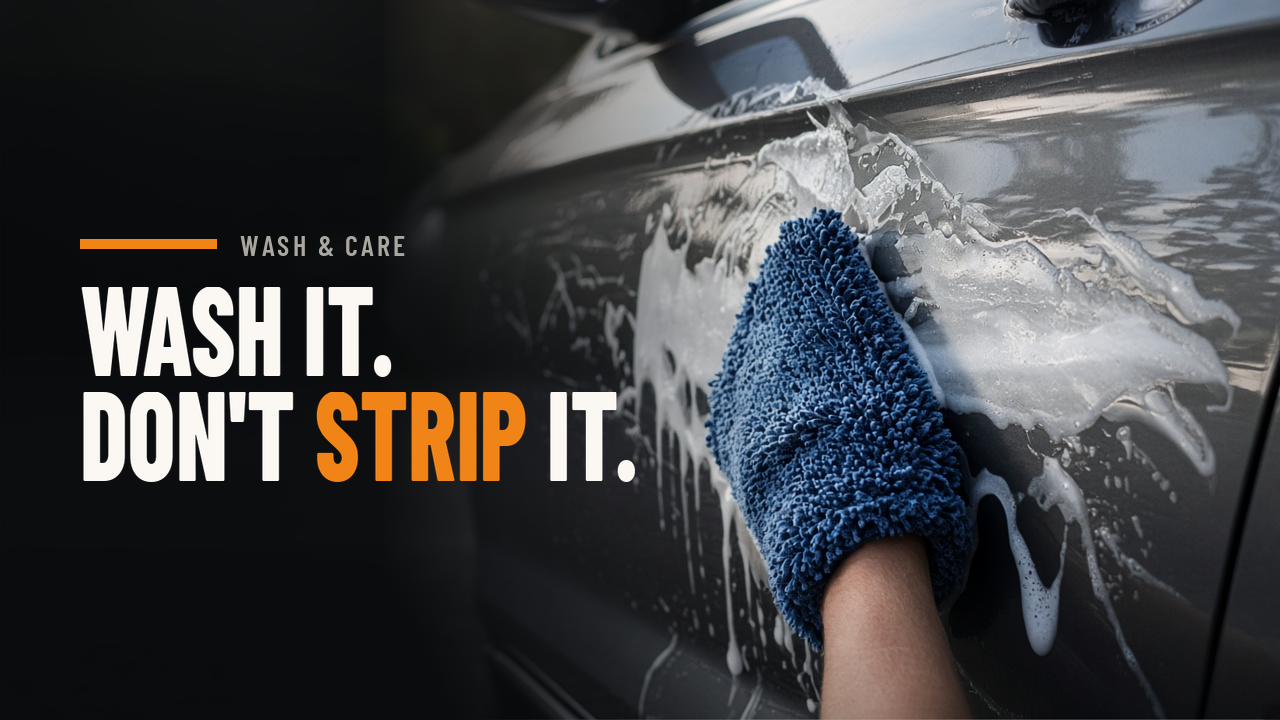
You do not need to turn every wash into a full detailing session. A useful routine can be straightforward—and if you are applying a product, check whether it belongs on wet or dry paint before reaching for your drying towel.
1. Check that the car is ready for towel contact
Before drying or applying anything, make sure the shampoo has been rinsed away and there is no visible dirt or grit left on the paint.
If you missed a dirty area, clean and rinse it properly. Do not use a drying towel to scrub away the dirt you missed during washing.
Check your towels, too. A clean car still needs clean tools: grit or sand can scratch the finish, and towels should be stored where they will not collect dust and dirt. AAA's DIY car-washing guidance
2. Decide whether you are applying a product today
Before drying, read the directions for the product you intend to use.
- —If it is designed for wet paint: apply it at the specified stage after rinsing, then follow its drying and finishing instructions.
- —If it requires dry paint: dry the vehicle completely before application.
- —If you are not applying a product: continue with drying and a final inspection.
"Spray-on" does not describe a complete application method. It does not tell you whether the surface should be wet, whether the product needs rinsing, or whether you need to buff afterward.
Also consider what is already on your car. Do not assume a new product is compatible with an existing wax, sealant, coating, wrap, or specialty finish. Check the relevant directions before combining treatments.
3. Dry the car with a clean, suitable towel
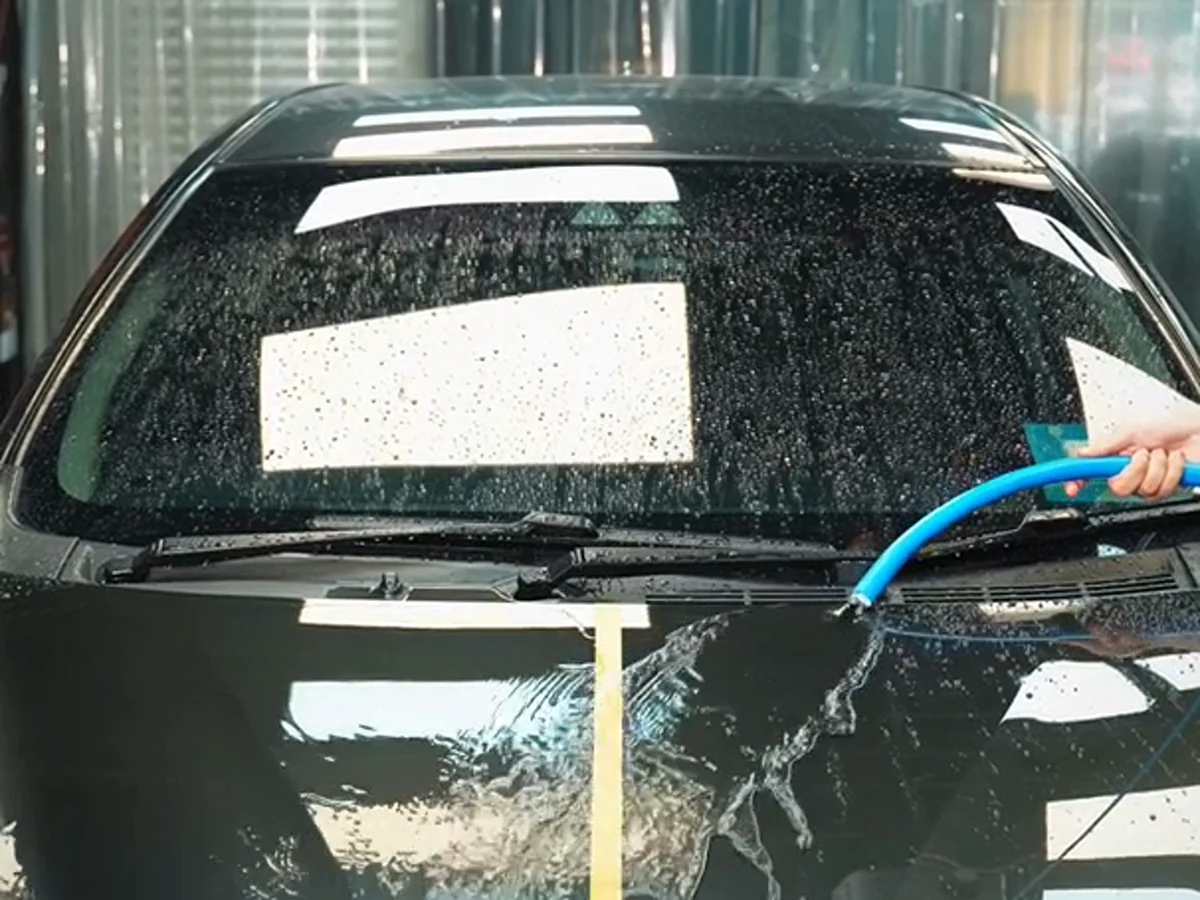
Use a clean automotive drying towel to remove the remaining water. When it becomes too saturated to dry effectively, switch to another clean towel or follow the towel manufacturer's care instructions.
Where possible, work in the shade and avoid hot paint. Heat can cause water and cleaning solutions to dry quickly, leaving spots or residue. Removing the water rather than leaving it to evaporate helps reduce that risk—and if you've applied a spray coating, understanding what rain and water spots do to ceramic coatings can help you decide when a rinse is enough. AAA's car-washing do's and don'ts
Drying and buffing are different jobs:
- —Drying removes water from the vehicle.
- —Spreading distributes an applied product.
- —Buffing completes the finishing step when the product's instructions call for it.
Prepare the cloths your chosen routine requires. A towel already saturated with rinse water should not be treated as a clean, dry finishing towel.
4. Inspect the finish before adding more product
Once the car is dry, take a moment to look over the paint.
Check for remaining droplets, missed dirt, product residue, or marks that were already present before washing.
If something does not look right, identify the issue before reaching for another product. A dirty patch, a water spot, and a scratch are different problems; do not assume the same spray will address all three.
Avoid repeatedly rubbing a stubborn mark with a drying towel or covering it with more product. Follow an appropriate, surface-compatible treatment—or ask for advice if you are unsure what the mark is.
5. Complete the product's finishing and aftercare steps
If you applied a paint-care product, finish its full routine. Depending on the product, that may include spreading, removing excess, drying, or buffing.
Then check its aftercare directions:
- —Does it recommend keeping the surface dry for a period?
- —Is there guidance about the next wash?
- —When is another application appropriate?
- —Are there restrictions on combining it with other products?
These instructions are product-specific. A waiting period or reapplication schedule for one product should not automatically be applied to another.
A routine wash also does not automatically mean that every protective product needs to be reapplied. Follow the maintenance guidance for the product already on your vehicle—if you're using a spray ceramic coating, knowing when to reapply depends on surface signals, not a fixed calendar.
Common questions after washing
Can I just let the car air-dry?
Leaving rinse water to evaporate can result in visible spotting. Using a suitable drying towel gives you a way to remove that water, especially when warm conditions would otherwise make it dry quickly. If you are using a product intended for wet application, complete that application stage first and follow its drying instructions.
Should I wax the car after every wash?
Not automatically. Follow the reapplication guidance for your chosen wax or protective treatment. Do not assume that adding another layer—or a different product—after every wash is necessary or compatible.
Does the car need to be completely dry before applying paint protection?
It depends on the product. Some routines begin on freshly rinsed, wet paint; others require the vehicle to be completely dry. Check before you start rather than treating all spray products the same way.
Can I use the same towel for drying and buffing?
Treat them as separate jobs. If the finishing instructions require a clean, dry towel, a water-saturated drying towel is not ready for that step. Have the necessary cloths prepared before applying the product.
Where APGO fits into your wash
If you want to add an APGO paint-care step, choose the application timing that fits your routine.
Apply to clean, completely dry paint, spread, and buff. APGO recommends thin application and keeping the car dry for 24 hours afterward for best results. It is not recommended for application over an existing wax layer.
Read the guide →Apply to clean paint while it is still wet after rinsing. Spread with a damp application cloth, towel-dry the vehicle, and finish by buffing with a clean coral-fleece microfiber towel.
Read the guide →Both routines include a final buff. Wet application does not mean skipping that step.
Compare APGO's wet- and dry-surface routinesA side-by-side explanation of the tools and application sequence · 6 min readThis article is published by APGO. General washing advice does not replace your vehicle's care instructions or the directions for a specific product.