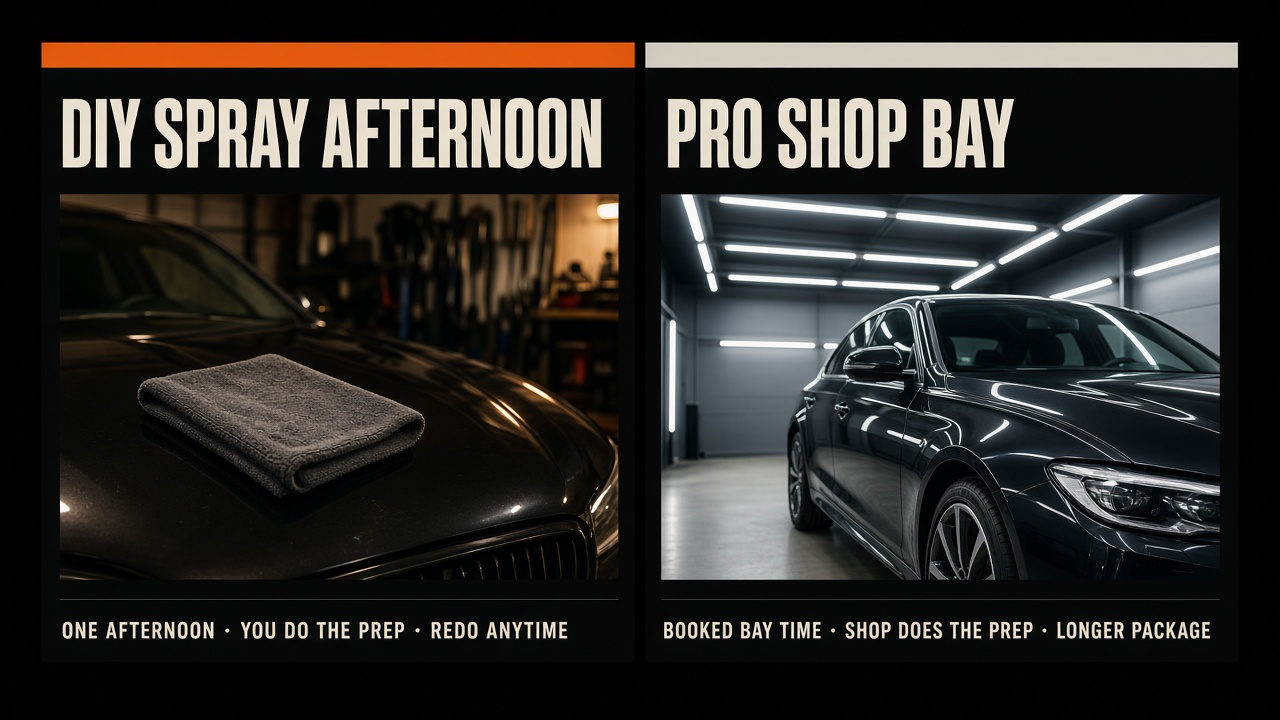
You are not choosing a chemistry lecture. You are choosing a path: a garage DIY spray ceramic (or glaze) you can redo yourself, versus a pro shop ceramic coating job you book and leave to the bay.
This guide compares time, cost scale, durability expectations, and who each path fits. It is not a how-to-spray guide. If you are still deciding between traditional wax and spray coating as finish strategies, start with our car wax vs spray ceramic coating guide, then come back to the DIY-versus-pro decision.
What you’re comparing
There are two different routes to paint protection:
We are comparing paths, not writing a white paper. Product labels, shop quotes, and APGO support still beat any generic “DIY is always enough” or “pro is always required” claim.
Time, cost, and effort
Think in orders of magnitude, not invented price tags. Shop packages vary widely by market, paint condition, and package tier. DIY cost is mostly the product plus your afternoon.
If your real constraint is “I need protection before next week and I can spend a Saturday,” DIY spray is usually the reachable path. If your constraint is “I want the shop to own prep and a longer service relationship,” pro is what you are shopping for, not a different spray bottle with a fancier name.
How long each path usually lasts
Durability is where DIY and pro marketing tend to talk past each other, so keep the claims honest.
DIY spray / glaze (example: D204). The U.S. product page says Atomic Colored Glaze lasts up to about 6 months. Treat that as a ceiling, not a promise that every car reaches six months regardless of how it is washed or stored. When water beading and gloss fade, reassess; our guide on how often to apply ceramic spray coating covers the signals to watch.
Professional shop ceramic. Shop coatings are usually sold on a years-scale expectation that depends on the package, the paint prep, and how you maintain the car afterward. This article does not quote a specific year count; ask the shop what the package includes and what maintenance it requires.
Neither path is permanent. DIY expects more frequent redos. Pro usually means fewer visits, a higher first ticket, and clearer aftercare rules.
Who DIY spray is for vs who should go pro
Use this as a decision list.
DIY spray ceramic / glaze tends to fit when you:
- •Can wash and fully dry the car, then spend a focused block of time working in the shade
- •Want a finish you can refresh yourself when performance fades
- •Are comfortable with month-scale durability (for D204, treat about 6 months as the upper landmark, then watch the paint)
- •Prefer controlling the schedule over booking a bay
- •Already know what is on the paint, or will clear unknowns before spraying
A professional ceramic job tends to fit when you:
- •Want the shop to handle paint correction or prep you will not do at home
- •Are buying a longer service package and aftercare relationship, not just a bottle
- •Need documentation, warranties, or package terms that only a shop offers
- •Do not have the time or tools for careful DIY prep and reapplication
- •Prefer one planned visit over learning a garage routine
If you want someone else to own the hard prep, go pro. If you want something you can redo on a free afternoon, DIY spray is the category to evaluate; then follow the current label for the bottle you buy.
What DIY still requires
Choosing DIY does not remove prep. Clean, compatible paint still comes first. If wax, an old coating, or an unknown film is on the paint, resolve that before you spray. Our coating-over-wax checklist covers that decision, so this article will not repeat it.
Aftercare is part of the path too. How you wash matters: brushes and strong soap wear a spray coating down sooner, as explained in does an automatic car wash remove ceramic coating. Weather matters as well; dirty water spots and road salt left on paint are covered in does rain damage ceramic coating. Reapply when those wear signals show rather than on a blind calendar, using the how-often guide. For the actual application steps on dry paint, use the dry-application guide.
Bottom line
DIY versus professional ceramic coating is a purchase decision between redoable convenience and paid bay labor with a longer package. DIY spray, with D204 as one dry-surface example rated up to about six months on the U.S. product page, fits drivers who will prep honestly and refresh when the finish fades. Pro fits drivers who want to buy prep, time, and a years-scale package, based on a written shop quote.
Pick the path that matches your calendar and your patience for redos, then follow the product label or the shop’s written package terms.