Knowing how to wash your car in winter is mostly about three things: timing, getting the salt off the parts you can't see, and making sure nothing freezes afterward. Road salt and slush don't stay on the doors where you'd notice them. They pack into the lower panels, the wheel arches, and the underside. Wash on the wrong day and you can end up with doors frozen shut, locks that won't turn, and a thin sheet of ice where the rinse water ran. This guide covers when and where to wash, what changes from a normal wash, how to clear snow and ice without scratching the paint, and what to check before you add protection.
Why Winter Washing Matters
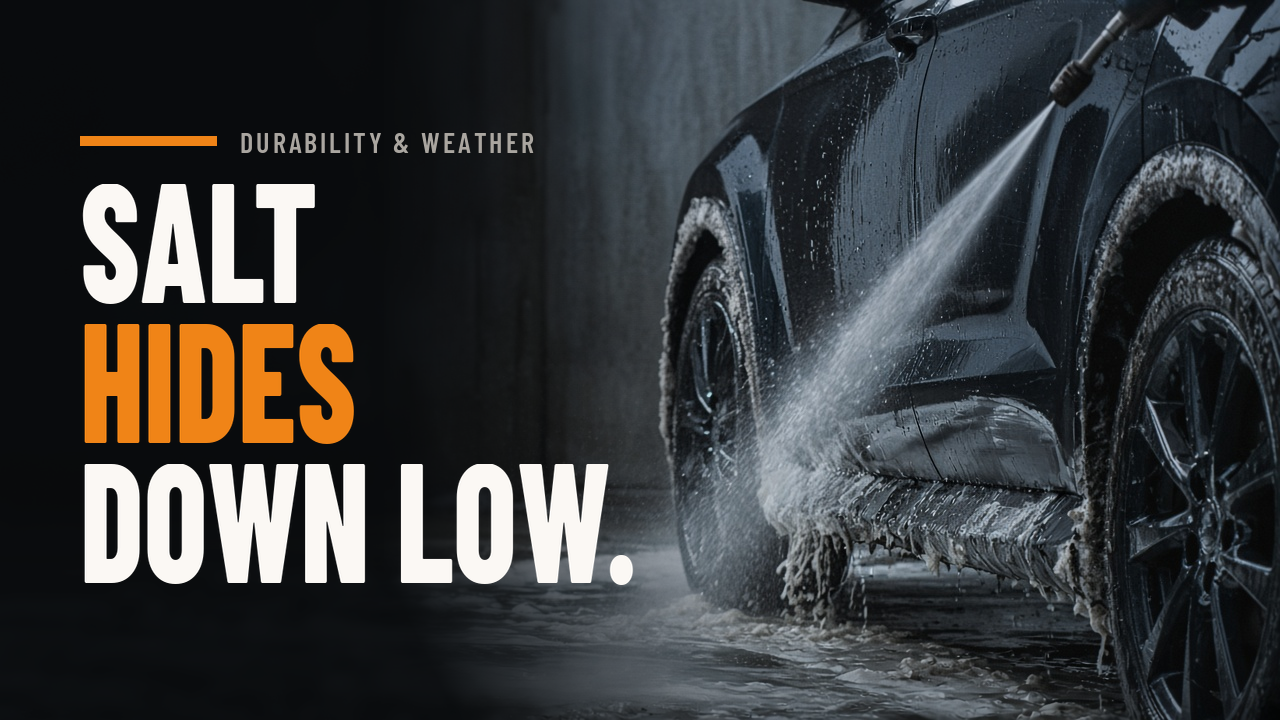
In winter, the road itself gets onto your car. Salt, de-icing brine, and slush splash up and collect along the rocker panels, inside the wheel arches, behind the bumpers, and underneath the car. Letting that mixture sit and dry on the car for weeks isn't a good idea, and the areas where it collects are exactly the ones a quick glance misses.
If you want to know how salt and wet weather affect a protective coating specifically, see does rain damage ceramic coating.
How to Wash Your Car in Winter: Pick the Right Day and Place
Timing does a lot of the work. When you can, choose a day that's above freezing and wash during the warmest part of the day, so the water has a chance to run off and the car can be dried before anything freezes. Avoid windy days too: wind makes the water on the car freeze faster and makes drying harder.
Where you wash matters as much as when:
- •A garage or sheltered driveway keeps wind off the car and gives you time to dry it properly.
- •A self-serve wash bay is often the easiest option in winter. Many have an undercarriage rinse, and the bay walls block the wind.
- •A touchless automatic wash is a convenient way to get salt off when washing at home isn't practical. It's not risk-free for protective layers, though; see does an automatic car wash remove ceramic coating.
Winter Wash Steps: What Changes From a Normal Wash
The basic hand wash doesn't change in winter. For the full routine, see how to wash a ceramic coated car. What follows is only what's different when there's salt on the road and ice in the forecast.
1. Rinse the Salt Off First, Starting Low
Start where the salt is: the undercarriage, the wheel arches, the rocker panels, and the area behind the bumpers. Rinse those thoroughly before you move to the rest of the car. At a self-serve bay, use the undercarriage setting if there is one. At home, work the hose along the low areas from below, then rinse the whole car from the top down.

2. Wash Gently, Top Down
Use a gentle car wash soap and wash from the roof down, rinsing your mitt often. Salt crystals can scratch just like sand, so make sure the loose salt and grit are rinsed off before a mitt touches the paint.
3. Never Pour Hot Water on Frozen Glass
It's tempting to clear an icy windshield with a kettle, but a sudden temperature change can crack the glass. Use the defroster, clear loose snow with a soft snow brush, and wait for the ice to soften before you clear it.
4. Dry Everything, Especially Door Jambs, Seals and Locks
Winter drying goes beyond the paint. Dry the door jambs, the rubber door seals, the lock cylinders, the fuel door, and the fold of the side mirrors. Water left in those spots is what freezes doors shut and locks solid overnight. Open and close each door a couple of times after drying so the seals don't stick. For drying technique in general, see what to do after washing your car.
Removing Snow and Ice Without Scratching the Paint
Snow removal is where a lot of winter scratches start. Use a soft-bristled snow brush and push the snow off and away from the car rather than scrubbing it across the paint. Keep the ice scraper on the glass; it has no place on painted panels.
Clear the roof first. It's safer for you and for the drivers behind you, and it keeps snow from sliding onto the windows you've just cleared. On the glass, let the defroster do most of the work instead of forcing the scraper through thick ice. If the wipers are frozen to the windshield, don't pull them free; wait until the defroster has released them.
How to Wash a Ceramic Coated Car in Winter
The principles don't change for a coated car: use a gentle soap, rinse the salt off first, and dry thoroughly. Avoid harsh degreasers or aggressive cleaners to shift road grime; gentle, frequent washing usually does the job with less wear on the coating.
Any protective layer tends to wear faster in winter, when salt, grit, and constant wet weather are working on it. That's normal, and it's why regular gentle washes matter more than a single deep clean. For a simple year-round routine, see ceramic coating maintenance.
Topping Up Protection in Winter: Check the Label First
If you want to add protection during winter, start with the product's label. Whether a product can be applied in cold weather depends on that product, so check before you plan a winter application.
APGO makes a silicone-based spray glaze, not a ceramic coating. APGO Atomic Colored Glaze (D204) is applied after the car is washed and completely dried. After buffing, APGO recommends keeping the car dry for 24 hours for the best result: no washing, and ideally no rain. D204 lasts up to about 6 months (180 days). APGO Atomic Glaze Coating (D215) is applied after washing and rinsing, while the paint is still wet: spray it onto the wet paint, spread it with a damp application cloth, towel-dry the car, then buff with a clean coral-fleece microfiber towel. D215 lasts up to about 4 months (120 days).
Whether D204 or D215 can be applied in winter or cold weather: check the current label or contact APGO support. Both durability figures are ceilings, not promises, and road salt and winter weather can make the real-world time shorter. The routines are in how to apply APGO Atomic Colored Glaze and how to apply APGO Atomic Glaze Coating, or you can compare APGO's silicone-based spray glaze.
FAQ
Is it OK to wash your car when it's below freezing?
It's better to wait for an above-freezing day and wash during the warmest part of it. Then dry the door seals and locks thoroughly so nothing freezes shut.
How often should you wash your car in winter?
It depends on how much salt and slush you drive through. See how often you should wash your car for more.
Should I wash the undercarriage in winter?
Yes. Salt collects underneath and in the wheel arches, so rinse those areas first.
Can I pour hot water on an icy windshield?
No. A sudden temperature change can crack the glass. Use the defroster and a soft snow brush instead.
How do I wash a ceramic coated car in winter?
The same way as any car: gentle soap, rinse the salt off first, and dry thoroughly.
Bottom Line
Pick your moment, rinse the salt from the low areas first, wash gently from the top down, and dry everything, including the seals and locks. Clear snow with a soft brush and keep the scraper off the paint. If you want to top up protection in winter, read the product's label before you start.
This article is published by APGO. General guidance does not replace the directions for a specific product.