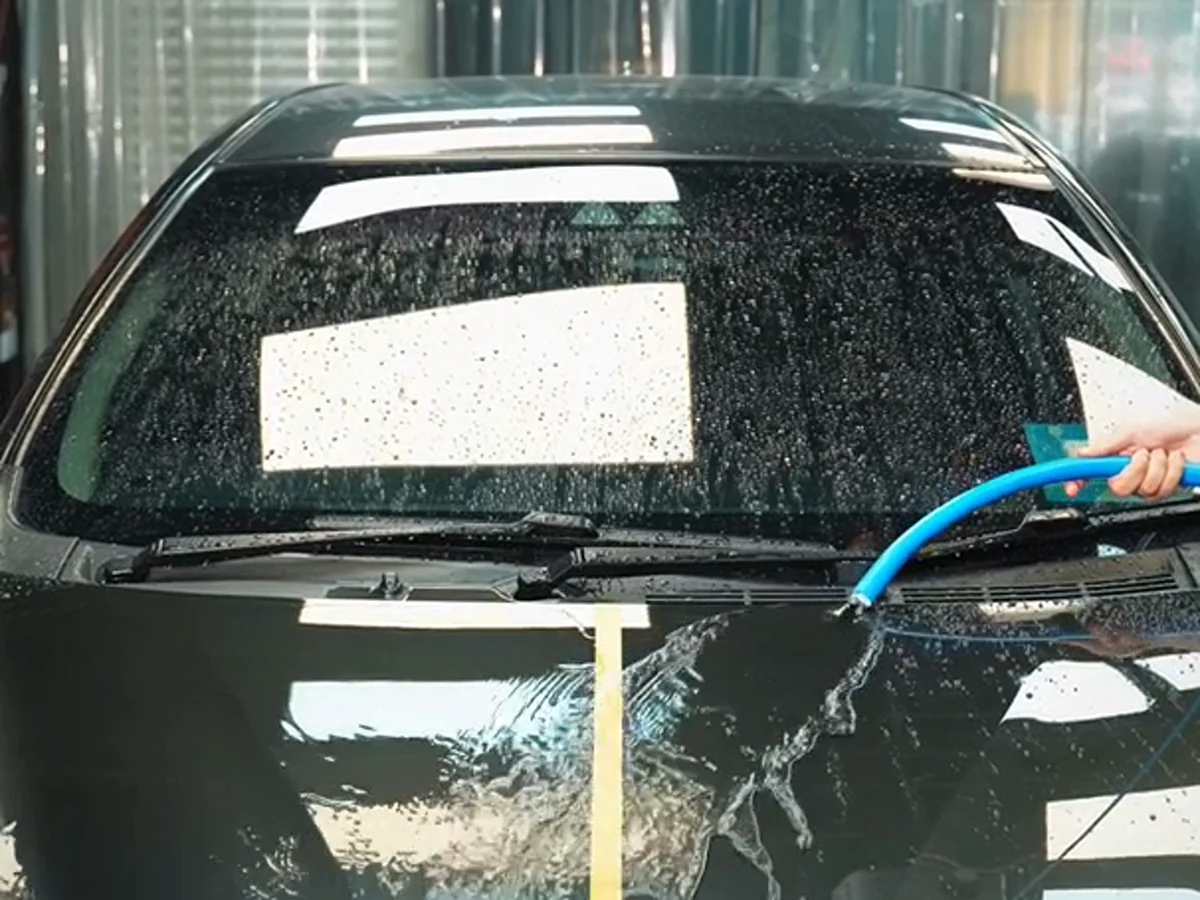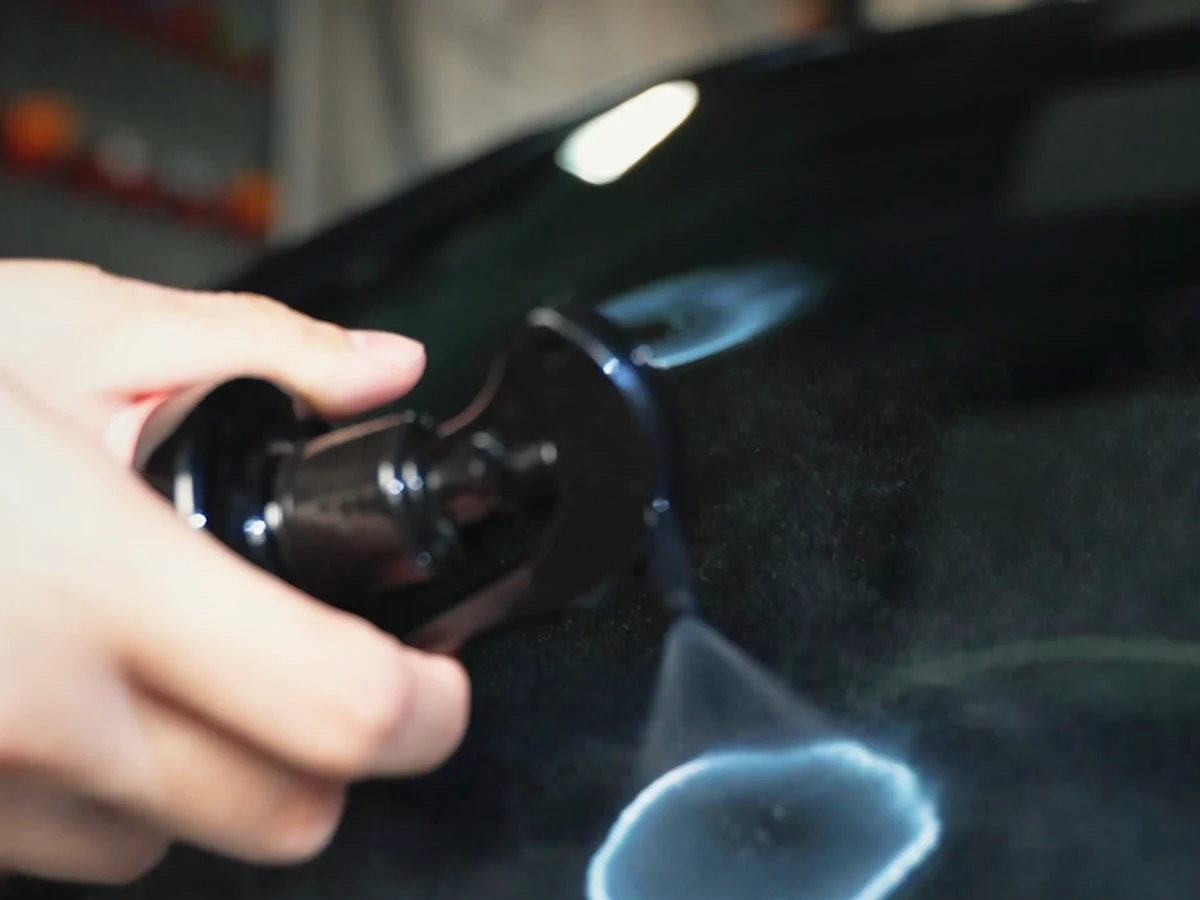
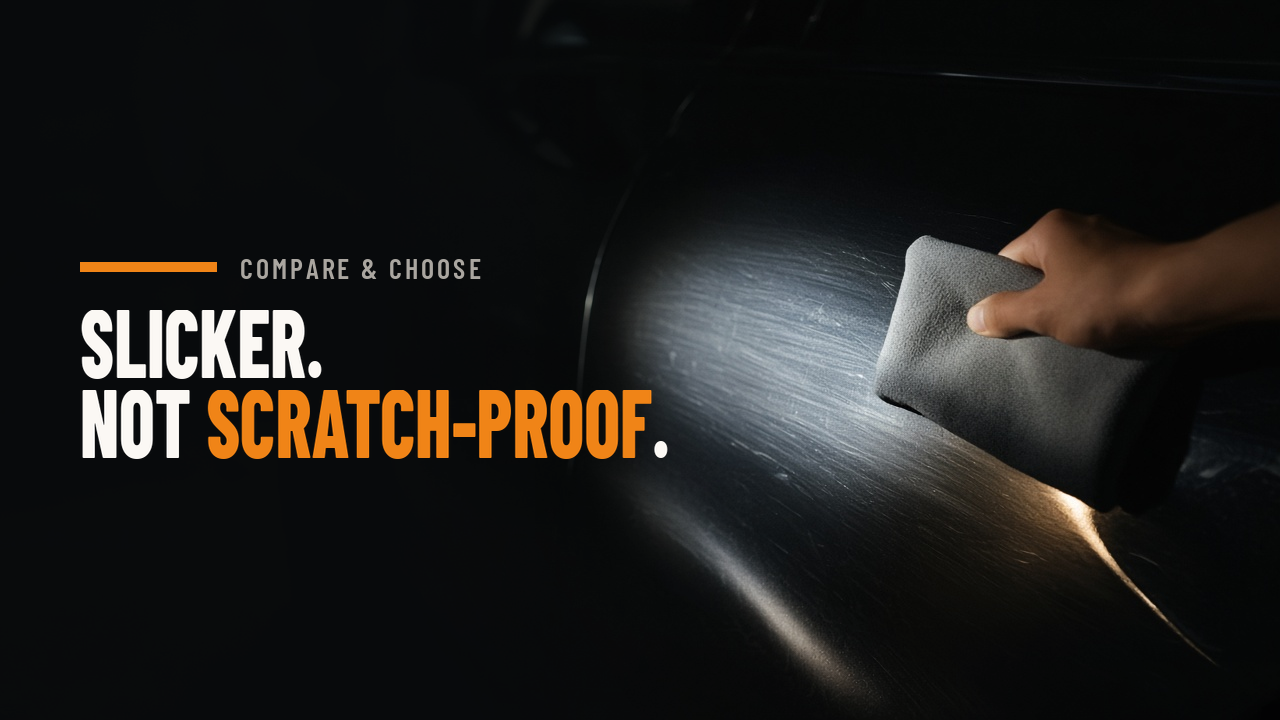
Does ceramic coating prevent scratches? Not in the way most people hope. A coating can make the paint slicker and easier to wash, which can mean fewer of the fine marks that come from washing, but it isn't armor. It won't stop a key, a rock, or a shopping cart, and it won't erase marks that are already there. This guide explains which kinds of scratches a coating can help with, which it can't, and what actually prevents or fixes each one. APGO's own products, which come up later, are a silicone-based spray glaze, not a ceramic coating.
Does Ceramic Coating Prevent Scratches? The Short Answer
Mostly no, with one useful exception. Thin protective layers, whether a spray or a liquid ceramic coating, typically make the surface slicker, so dirt tends to cling less and your wash mitt and towel glide instead of drag. That can help reduce the fine marring that builds up from washing and drying.
What a thin layer can't do is stop key scratches, rock chips, or deeper scratches, and it won't repair damage that's already in the paint. Think of it as making the paint easier to care for, not harder to damage.
Not All Scratches Are the Same
"Scratches" covers several different kinds of damage, and a coating relates to each one differently.
Swirl Marks and Fine Wash Marring
These are the fine, circular or web-like marks you see in direct sun or under a flashlight. They usually come from washing and drying: grit or dust gets dragged across the paint by a mitt, a towel, or a brush. They're shallow, but on a glossy finish they're very visible.
Deeper Scratches
These come from keys, branches, shopping carts, bikes, and bags, and you can often feel them with a fingernail. They go deeper than the fine marks above, beyond anything a thin protective layer is built to absorb.
Rock Chips
Rock chips are small, sharp craters where gravel or debris hit the paint at speed. They're impact damage, not friction, which is why they behave differently from every other kind of scratch.
What a Coating Can and Can't Do
What It Can Help With
A coating typically makes the surface slicker and easier to wash. Dirt tends to rinse off more readily, and a mitt or towel is less likely to catch and drag. Less drag during a wash can mean fewer new fine marks over time, as long as the wash itself is done carefully. That's a real benefit, but it's an indirect one: the coating makes good technique work better; it doesn't replace it.
What It Can't Do
It can't stop key scratches, rock chips, or deeper scratches. It doesn't fill or repair scratches or swirl marks that are already there, and it isn't permanent. For a fuller list of what spray coatings don't do, see what spray ceramic coating is.
Does Ceramic Coating Prevent Swirl Marks? Your Wash Method Matters More
A coating can make washing smoother, but the thing that really decides whether you get swirl marks is how you wash and dry the car. Most swirls come from grit being dragged across the paint, and no coating stops that if the grit is still there.
What actually helps:
- •Rinse first. Get loose sand and grit off before a mitt touches the paint.
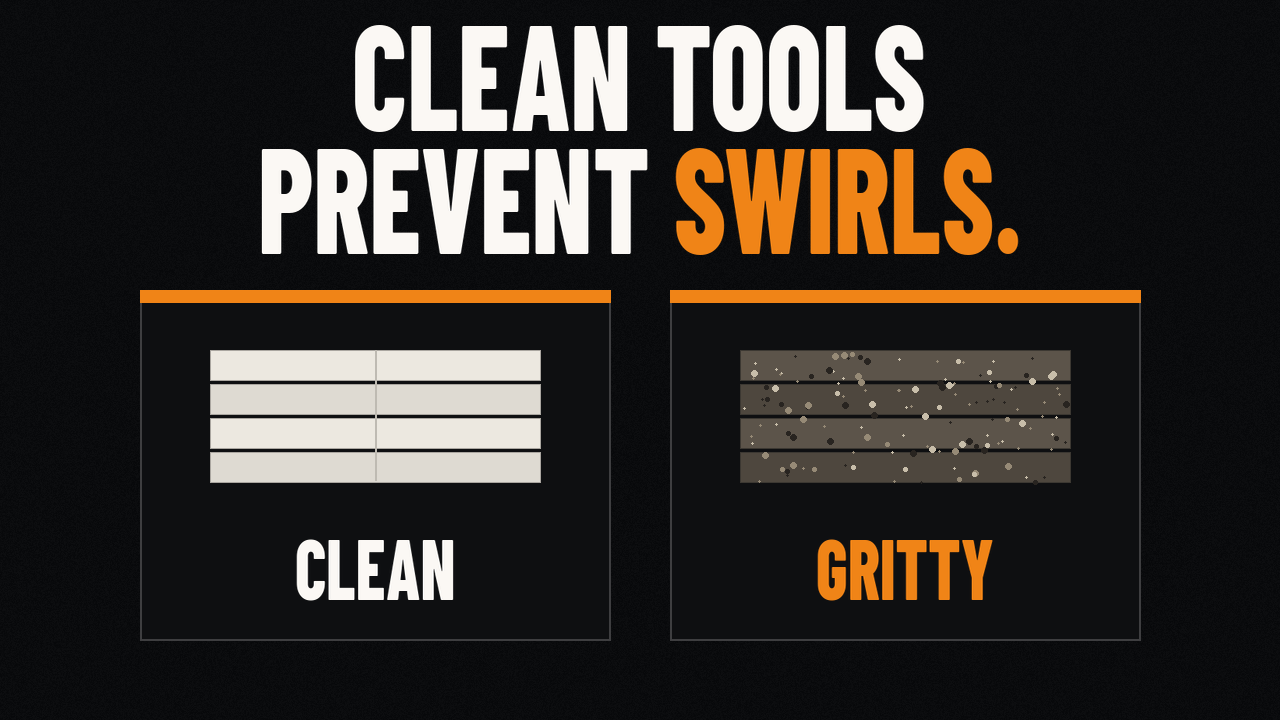
- •Use clean tools. A clean mitt and clean towels, rinsed or swapped often, and never a towel that's been dropped.
- •Never wipe dry dirt. Dry-wiping dust off the paint is one of the quickest ways to create swirls.
- •Dry with light pressure. Let the towel absorb water rather than pressing it into the paint.
For the full routine, see how to wash a ceramic coated car, and for drying technique, see what to do after washing your car. Brush-style automatic washes are another common source of swirls; see does an automatic car wash remove ceramic coating.
Does Ceramic Coating Prevent Rock Chips?
No. A rock chip is an impact, and a thin coating isn't impact protection. A layer that thin can't absorb a stone hitting the hood at highway speed, and chips tend to show up on the front bumper, hood, and mirrors of any car that sees regular highway driving.
Chips call for a different kind of protection. To see how the main options compare, read types of car paint protection.
Already Have Scratches? What Actually Fixes Them
Start by looking at the paint in good light, from a few angles, and running a fingernail gently across any mark you find. Fine marks that you can see but not feel are a different job from a scratch that catches your nail.
A spray or coating won't remove scratches. Actually removing fine marks usually means polishing, which levels the surface around them. Polishing is a last resort, not a routine step. If you haven't done it before, or the scratches are deep, it's worth asking a professional.
Not every mark you see after applying a product is a scratch. Streaks and high spots from application look different from swirls that were already there; see how to fix streaks and high spots. Fine marks are also most visible on dark paint; our guide to ceramic coating on a black car covers how to check it.
Where APGO's Silicone-Based Spray Glaze Fits
APGO makes a silicone-based spray glaze, not a ceramic coating. APGO Atomic Colored Glaze (D204) doesn't fill or remove existing scratches or swirl marks. If the paint has them before you apply it, they'll still be there afterward.
What APGO does stress for D204 is prep: check the paint for leftover grit, sand, or dust before you touch it with a cloth, and keep your cloth and towel clean. Anything left on the surface can be dragged across the paint while you spread or buff, and that's what causes fine scratches and swirl marks. For the full routine, see how to apply APGO Atomic Colored Glaze, or compare APGO's silicone-based spray glaze.
FAQ
Does ceramic coating prevent swirl marks?
It can make washing smoother, but clean tools and a careful wash method matter far more.
Does ceramic coating prevent rock chips?
No. A thin coating isn't impact protection. See types of car paint protection for thicker options.
Will a ceramic spray hide existing scratches?
No. It doesn't repair scratches, and polishing is what removes fine marks.
Does a coating make my car scratch-proof?
No. It's a thin layer that makes the surface slicker, not harder to damage.
Bottom Line
A coating makes paint slicker and easier to wash; it doesn't make it scratch-proof. Your wash method decides whether you get swirl marks, rock chips call for a different kind of protection, and polishing is what removes existing marks. If you use APGO's D204, remember that it won't fill existing scratches, so clean prep matters.
This article is published by APGO. General guidance does not replace the directions for a specific product.