A storm rolls through and the first worry is simple: does rain damage ceramic coating?
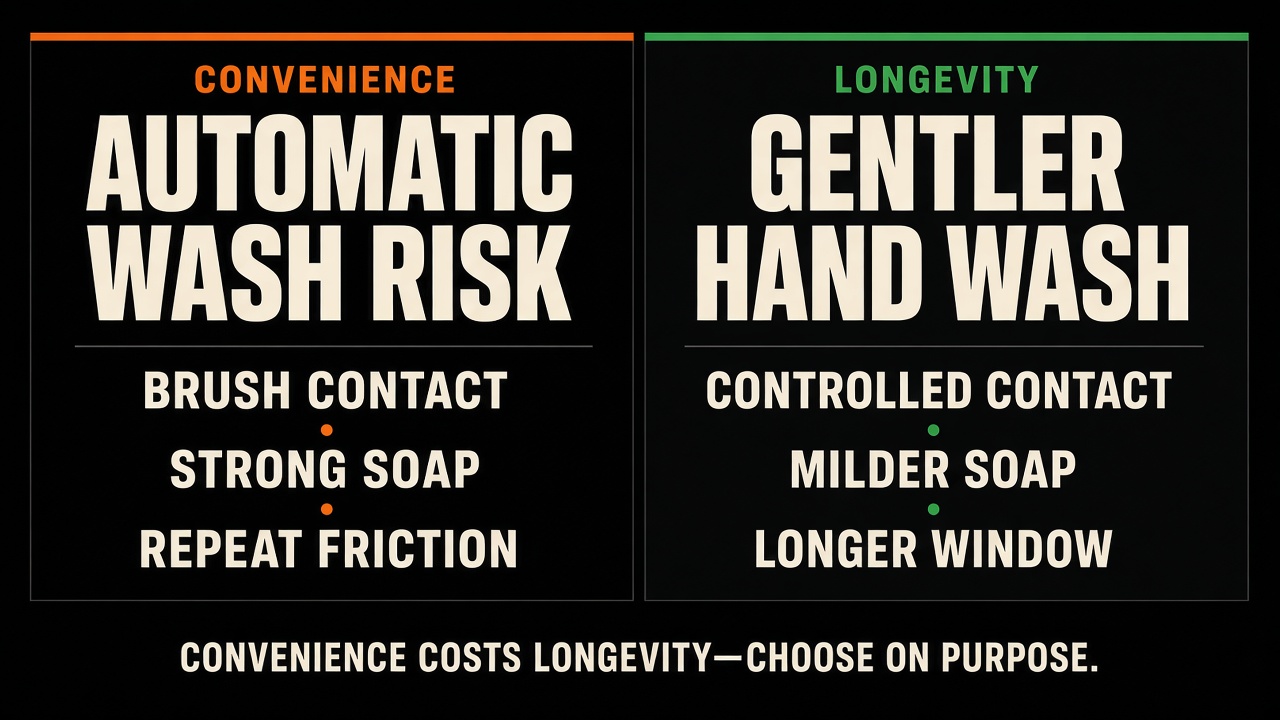
This guide covers rain, dirty water spots, and winter road salt—seasonal and road-condition risk, not how to spray a coating and not another automatic-wash debate. Wash-method risk lives in the automatic car wash guide; start here for weather and salt.
What rain alone usually does
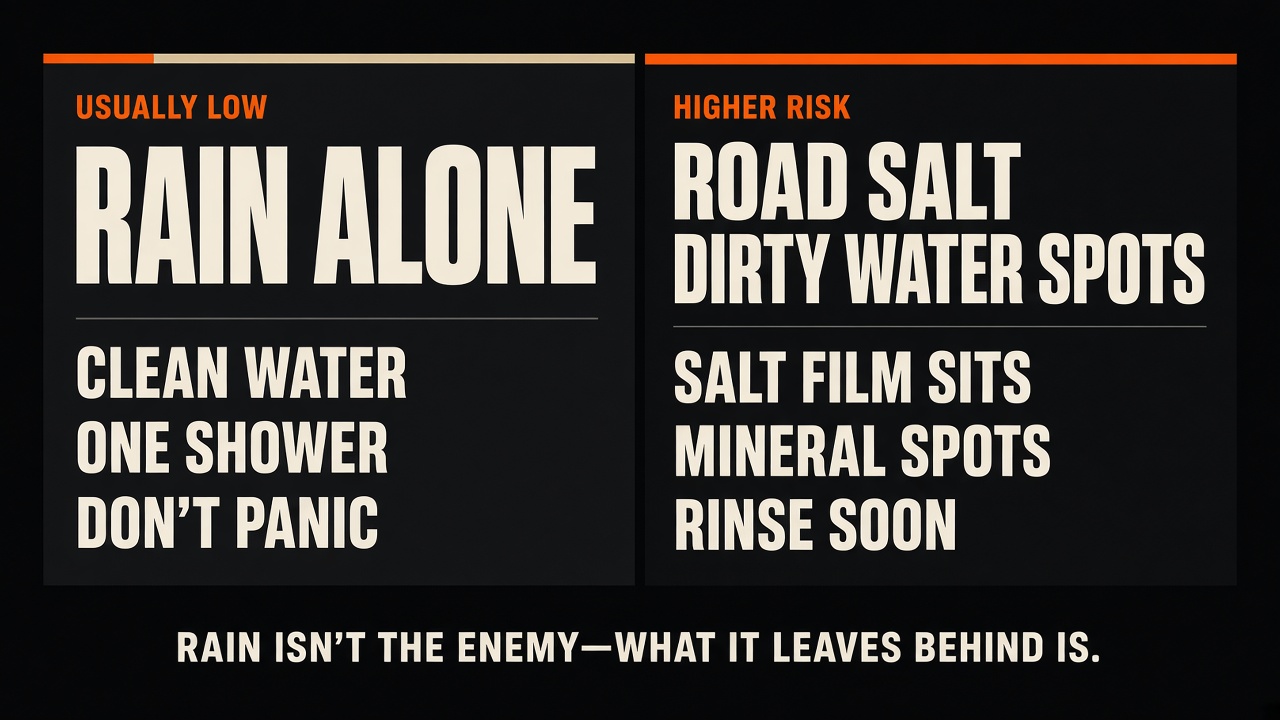
Clean rain by itself rarely "wipes off" a spray ceramic / glaze coating in one shower. What hurts the look and the water behavior is what the water leaves behind: mineral spots, dirty film, acidic fallout, and spots that bake on in the sun.
So the useful answer is not "rain always destroys coatings." It is: rain plus residue and heat is what drivers actually see as damage.
Rain vs dirty water spots vs road salt
Winter and road salt
Road salt and salty brine are harder on finishes than a clean summer shower. Salt that sits on paint holds moisture and contaminants against the clear coat and any spray protection on top. The longer it stays, the more likely you see dulling, spotting, and earlier fade in water behavior.
After driving on treated roads, rinse the salt film off when you can—especially wheel arches, lower panels, and the rear. You do not need a full detailing tutorial here; the goal is simple: don't let salt dry and sit.
What to do after rain or salt exposure
- 1Rinse or wash off dirt, minerals, and salt before they bake on.
- 2Dry with clean towels so new spots don't form from standing water.
- 3Watch beading and how fast the car soils over the next washes. If signals stack and performance has clearly faded, plan a reapply—see how often to reapply. Climate and salt exposure can shorten the interval; this article does not rewrite that full cadence guide.
If old wax or an unknown layer is still on the paint, clear or confirm before you spray again—compatibility is covered elsewhere.
Bottom line
Rain alone usually does not ruin a ceramic spray coating in one go. Dirty water spots and winter road salt that sit on the paint are the real seasonal risks. Rinse what the weather leaves behind, and pair this with the automatic-wash guide if your other risk is how you clean the car.
This guide is published by APGO. General paint-care guidance does not replace your vehicle's care instructions or the directions for a specific product.